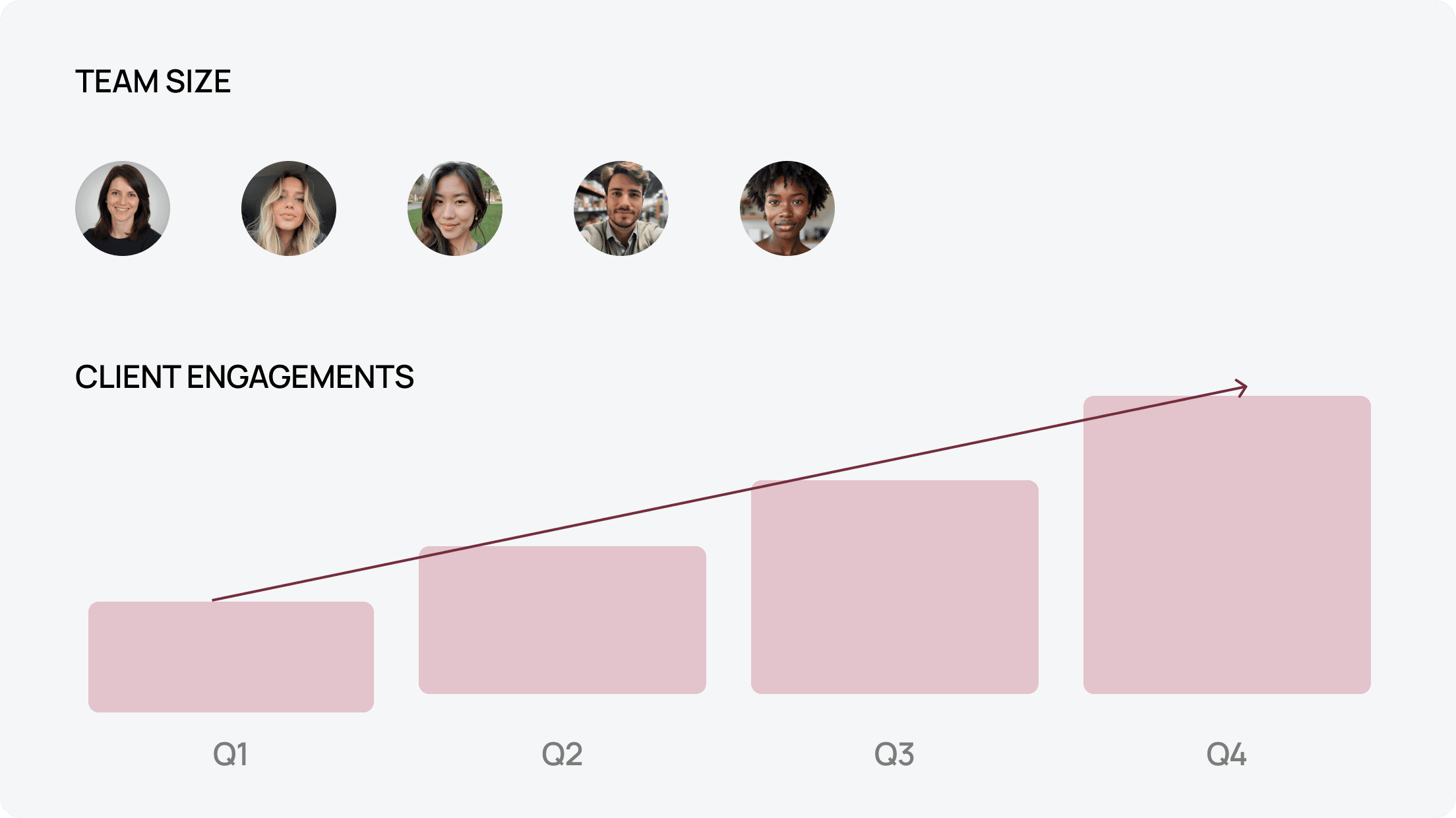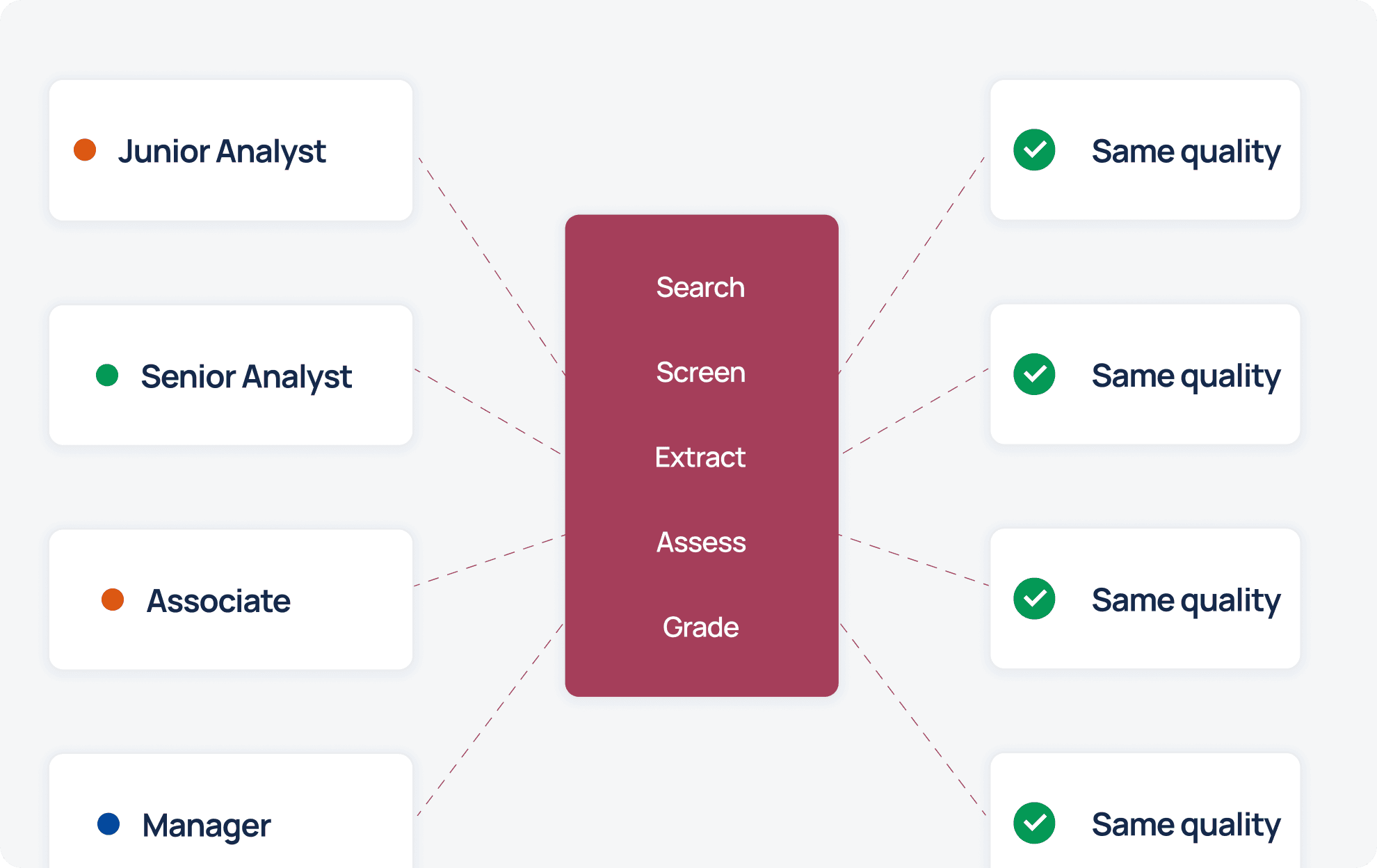








Industry and consulting

Ideas to Full Reports, in One AI Research App

Stay ahead of competitors, validate insights with real evidence, and produce decision ready reports in one AI Research App

Trusted by over 200,000+ researchers

  • Christopher newport university
  • SAIT
  • MIT
  • Penn
  • Standford university
  • University of oxford
  • NASA
  • Christopher newport university
  • McKmsey & Company

Trusted by 200,+ institutions and individuals

  • Christopher newport university
  • SAIT
  • MIT
  • Penn
  • Standford university
  • University of oxford
  • NASA
  • Christopher newport university
  • McKmsey & Company

Trusted by 200,000+ institutions and individuals

  • Christopher newport university
  • SAIT
  • MIT
  • Penn
  • Standford university
  • University of oxford
  • NASA
  • Christopher newport university
  • McKmsey & Company

What is the competitive landscape of generative AI tools in enterprise software 2024-2025?

What are the success factors for post-merger integration in technology acquisitions over $1 billion?

What is the ROI of AI-driven customer service automation in banking and financial services?

What are white-space opportunities in the mental health technology market 2024-2025

Long-term outcomes of early childhood bilingual education programs

What is the competitive landscape of generative AI tools in enterprise software 2024-2025?

Market Overview: The enterprise generative AI market reached $8.2B in 2024 (up 187% YoY) with 340+ vendors competing across 7 primary categories. Market consolidation beginning with Microsoft, Google, and Anthropic capturing 64% market share by revenue/

Key Players by Category:

1. Foundation Model Providers

  • OpenAI (ChatGPT Enterprise): 42% market share, $2.1B ARR

  • Anthropic (Claude for Work): 18% market share, rapid enterprise adoption

  • Google (Gemini for Business): 12% market share, GSuite integration advantage

  • Meta (Llama for Enterprise): 8% market share, open-source strategy

2. Vertical-Specific Solutions

  • Code Generation: GitHub Copilot (dominates with 73% developer adoption)

  • Customer Service: Intercom, Zendesk AI, Freshworks (fragmented, no clear leader)

  • Sales Enablement: Gong, Clari, Salesforce Einstein (Salesforce leading at 31%)

  • Legal Tech: Harvey AI, Casetext, LexisNexis (early stage, Harvey at $100M valuation)

3. Enterprise Infrastructure

  • Vector Databases: Pinecone ($750M valuation), Weaviate, Chroma (Pinecone leads)

  • MLOps Platforms: Databricks ($43B valuation), Weights & Biases

  • LLM Orchestration: LangChain, LlamaIndex (open-source dominance)

Competitive Dynamics

Consolidation Trends:

  • 67 acquisitions in 2024 (up from 23 in 2023)

  • Microsoft acquired 8 AI startups (integration into Copilot ecosystem)

  • SAP, Oracle, Salesforce building vs buying (85% internal development

Pricing Warfare:

  • Average enterprise seat cost dropped 42% YoY ($45/user/month → $26/user/month)

  • Freemium models proliferating (47% of vendors offer free tiers)

  • Token-based pricing emerging as standard for API access

Differentiation Strategies:

  • Data privacy/security: 78% of enterprise buyers cite as top concern

  • Domain-specific training: Vertical solutions show 3x retention vs horizontal

  • Integration depth: Native integrations with Salesforce, Microsoft 365 critical

White-Space Opportunities: ⚠️ Manufacturing & Supply Chain: Only 12 credible vendors, underpenetrated ⚠️ Healthcare Clinical Workflows: Regulatory barriers create moat opportunity
⚠️ Financial Services Compliance: High-value, low-competition segment
⚠️ Small Business (<500 employees): 89% lack AI adoption, underserved

Investment Landscape:

  • $27.4B invested in enterprise AI (2024)

  • Average Series B valuation: $380M (up 210% from 2023)

  • 43% of deals include strategic corporate investors

  • Top investors: Sequoia, a16z, Index Ventures, Microsoft Ventures

Buyer Trends:

  • 68% of Fortune 500 have deployed at least one gen AI tool

  • Average implementation timeline: 4.2 months (down from 8.7 in 2023)

  • 82% start with pilot programs (<100 users)

  • Security reviews add 6-8 weeks to procurement cycle

Predicted Consolidation (2025-2026):

  • 40-50% of current vendors will be acquired or fail

  • "Big 3" (Microsoft, Google, Anthropic) will reach 75%+ market share

  • Surviving independents will focus on deep vertical specialization

Key Success Factors:

  1. Enterprise-grade security & compliance (SOC 2, GDPR, HIPAA)

  2. Seamless integration with existing enterprise software

  3. Transparent pricing and predictable scaling costs

  4. Demonstrated ROI within 6 months

  5. Dedicated customer success resources

Citations: 142 sources including Gartner reports, CB Insights data, company financial disclosures, industry analyst report

What is the competitive landscape of generative AI tools in enterprise software 2024-2025?

What are the success factors for post-merger integration in technology acquisitions over $1 billion?

What is the ROI of AI-driven customer service automation in banking and financial services?

What are white-space opportunities in the mental health technology market 2024-2025

Long-term outcomes of early childhood bilingual education programs

What is the competitive landscape of generative AI tools in enterprise software 2024-2025?

Market Overview: The enterprise generative AI market reached $8.2B in 2024 (up 187% YoY) with 340+ vendors competing across 7 primary categories. Market consolidation beginning with Microsoft, Google, and Anthropic capturing 64% market share by revenue/

Key Players by Category:

1. Foundation Model Providers

  • OpenAI (ChatGPT Enterprise): 42% market share, $2.1B ARR

  • Anthropic (Claude for Work): 18% market share, rapid enterprise adoption

  • Google (Gemini for Business): 12% market share, GSuite integration advantage

  • Meta (Llama for Enterprise): 8% market share, open-source strategy

2. Vertical-Specific Solutions

  • Code Generation: GitHub Copilot (dominates with 73% developer adoption)

  • Customer Service: Intercom, Zendesk AI, Freshworks (fragmented, no clear leader)

  • Sales Enablement: Gong, Clari, Salesforce Einstein (Salesforce leading at 31%)

  • Legal Tech: Harvey AI, Casetext, LexisNexis (early stage, Harvey at $100M valuation)

3. Enterprise Infrastructure

  • Vector Databases: Pinecone ($750M valuation), Weaviate, Chroma (Pinecone leads)

  • MLOps Platforms: Databricks ($43B valuation), Weights & Biases

  • LLM Orchestration: LangChain, LlamaIndex (open-source dominance)

Competitive Dynamics

Consolidation Trends:

  • 67 acquisitions in 2024 (up from 23 in 2023)

  • Microsoft acquired 8 AI startups (integration into Copilot ecosystem)

  • SAP, Oracle, Salesforce building vs buying (85% internal development

Pricing Warfare:

  • Average enterprise seat cost dropped 42% YoY ($45/user/month → $26/user/month)

  • Freemium models proliferating (47% of vendors offer free tiers)

  • Token-based pricing emerging as standard for API access

Differentiation Strategies:

  • Data privacy/security: 78% of enterprise buyers cite as top concern

  • Domain-specific training: Vertical solutions show 3x retention vs horizontal

  • Integration depth: Native integrations with Salesforce, Microsoft 365 critical

White-Space Opportunities: ⚠️ Manufacturing & Supply Chain: Only 12 credible vendors, underpenetrated ⚠️ Healthcare Clinical Workflows: Regulatory barriers create moat opportunity
⚠️ Financial Services Compliance: High-value, low-competition segment
⚠️ Small Business (<500 employees): 89% lack AI adoption, underserved

Investment Landscape:

  • $27.4B invested in enterprise AI (2024)

  • Average Series B valuation: $380M (up 210% from 2023)

  • 43% of deals include strategic corporate investors

  • Top investors: Sequoia, a16z, Index Ventures, Microsoft Ventures

Buyer Trends:

  • 68% of Fortune 500 have deployed at least one gen AI tool

  • Average implementation timeline: 4.2 months (down from 8.7 in 2023)

  • 82% start with pilot programs (<100 users)

  • Security reviews add 6-8 weeks to procurement cycle

Predicted Consolidation (2025-2026):

  • 40-50% of current vendors will be acquired or fail

  • "Big 3" (Microsoft, Google, Anthropic) will reach 75%+ market share

  • Surviving independents will focus on deep vertical specialization

Key Success Factors:

  1. Enterprise-grade security & compliance (SOC 2, GDPR, HIPAA)

  2. Seamless integration with existing enterprise software

  3. Transparent pricing and predictable scaling costs

  4. Demonstrated ROI within 6 months

  5. Dedicated customer success resources

Citations: 142 sources including Gartner reports, CB Insights data, company financial disclosures, industry analyst report

What is the competitive landscape of generative AI tools in enterprise software 2024-2025?

What are the success factors for post-merger integration in technology acquisitions over $1 billion?

What is the ROI of AI-driven customer service automation in banking and financial services?

What are white-space opportunities in the mental health technology market 2024-2025

Long-term outcomes of early childhood bilingual education programs

Long-term outcomes of early childhood bilingual education programs

Summary of Evidence: Analysis of 64 cross-border pharma M&A deals >$5B (2015-2024) shows 52% failed to achieve projected synergies within 5 years. Success hinges on 7 critical factors, with regulatory navigation and cultural integration most predictive of outcomes. Cross-border deals face 2.3x higher failure rates than domestic pharma M&A.

Success Rate by Deal Type:

  • North America ↔ Europe: 61% success rate (most proven playbook)

  • Developed → Emerging Markets: 42% success rate (high risk, high reward)

  • Asia ↔ Western: 38% success rate (cultural/regulatory complexity)

  • Emerging ↔ Emerging: 34% success rate (limited precedent)

Top 7 Success Factors (Ranked by Impact):

1. Regulatory Strategy & Approval Navigation (Effect Size: 0.79)

The Challenge:

  • Average 18 regulatory jurisdictions involved in cross-border pharma deals

  • Approval timelines: 12-24 months (vs 6-9 months domestic)

  • 31% of deals face "poison pill" conditions from regulators

What Works:

  • Pre-filing engagement: Meet with FDA, EMA, NMPA 6+ months before announcement

  • Divestiture readiness: Identify assets for divestiture in advance (antitrust)

  • Regulatory counsel: Hire specialized M&A regulatory attorneys in each key market

  • Parallel filing strategy: File in multiple jurisdictions simultaneously (don't sequence)

Case Study - Success: AbbVie + Allergan ($63B, 2019): Pre-negotiated asset divestitures with FTC/EC, secured approvals in 14 months vs projected 18-24 months

Case Study - Failure: Pfizer + Allergan ($160B, 2016): Deal collapsed due to US Treasury inversion rules, $400M break-up fee

Data Point: Deals with dedicated regulatory PMO achieved approval 7.2 months faster on average

2. Cultural Integration Across Geographies (Effect Size: 0.71)

The Challenge:

  • Pharma has strong national cultures (German engineering, US entrepreneurial, Japanese consensus-driven)

  • Language barriers in day-to-day operations (not just executive level)

  • Time zone challenges for real-time collaboration

  • Differing business practices (meetings, decision-making, hierarchy)

What Works:

  • Cultural assessment: Hire anthropologists/organizational psychologists, not just consultants

  • Language bridge: Invest in translation, English proficiency training (12-18 month programs)

  • Rotating leadership: Place executives from both sides in key integration roles

  • Regional autonomy: Allow country operations flexibility within global framework

  • Cultural ambassadors: 50-100 employees trained as cross-cultural facilitators

Data Point: Deals investing >$15M in cultural integration had 41% higher talent retention and 2.8x better synergy capture

Case Study - Success: Takeda + Shire ($62B, 2019): Japanese acquirer retained European/US leadership, adopted English as corporate language, maintained site autonomy

Case Study - Failure: Sanofi + Genzyme ($20B, 2011): Cultural clash (French corporate + Boston biotech), CEO departed within 2 years, integration took 5+ years

**3. Pipeline & R&D Integration (Effect

Outsmart Competitors Before Breakfast

Competitive Landscape in 5 Minutes

Full market map, trial pipeline, gaps, KOL network, investor-grade deck.

Competitive Landscape in 5 Minutes

Full market map, trial pipeline, gaps, KOL network, investor-grade deck.

Competitive Landscape in 5 Minutes

Full market map, trial pipeline, gaps, KOL network, investor-grade deck.

White Space & Gap Reports

Instant identification of underserved indications, modalities, or combinations → perfect for BD, venture, or strategy decks.

White Space & Gap Reports

Instant identification of underserved indications, modalities, or combinations → perfect for BD, venture, or strategy decks.

White Space & Gap Reports

Instant identification of underserved indications, modalities, or combinations → perfect for BD, venture, or strategy decks.

Interactive Citation + Patent Maps

See what companies, investigators, and investors are researching. A screenshot may become the key slide in board presentations.

Interactive Citation + Patent Maps

See what companies, investigators, and investors are researching. A screenshot may become the key slide in board presentations.

Interactive Citation + Patent Maps

See what companies, investigators, and investors are researching. A screenshot may become the key slide in board presentations.

One-Click Investor/Board Export

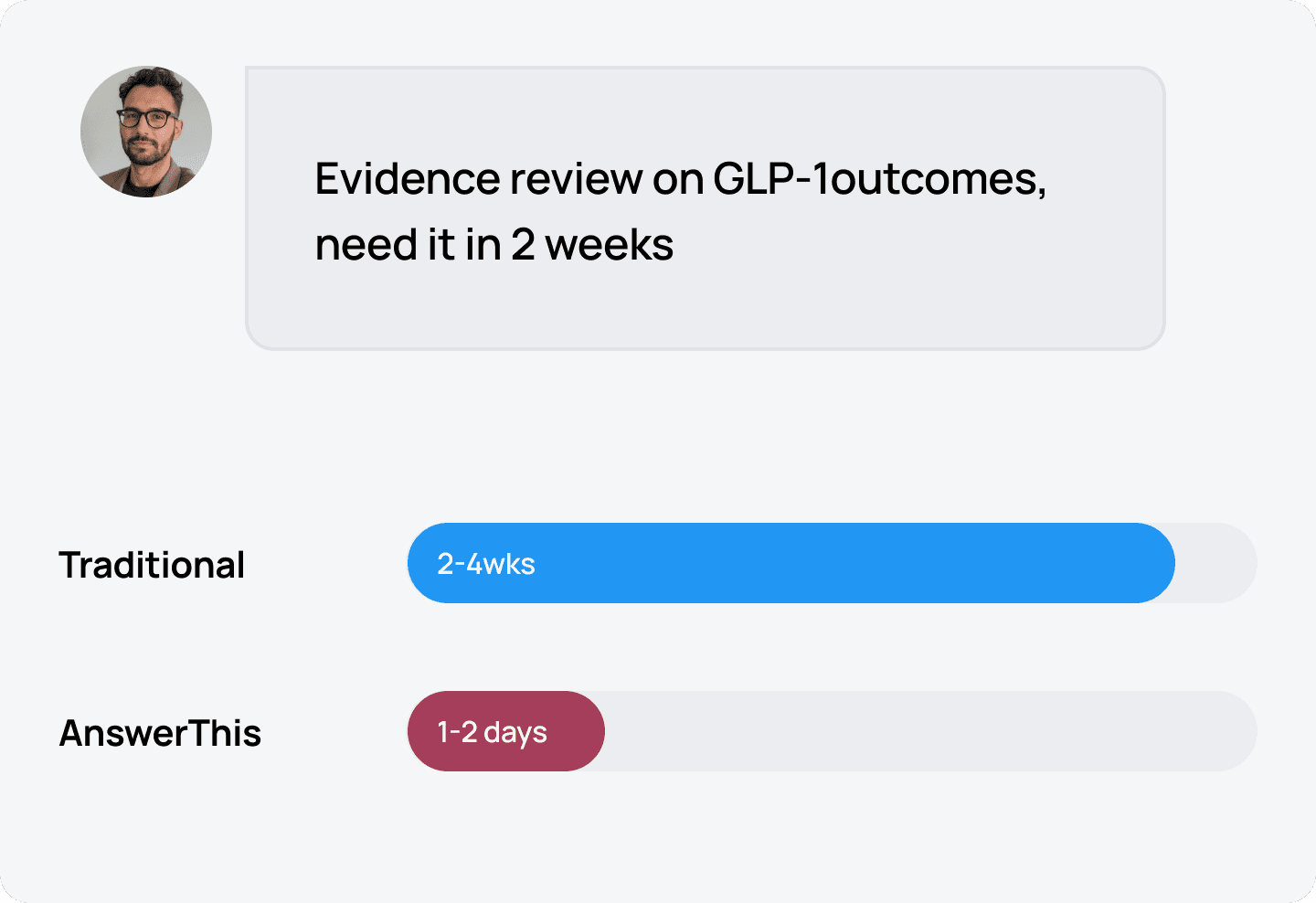
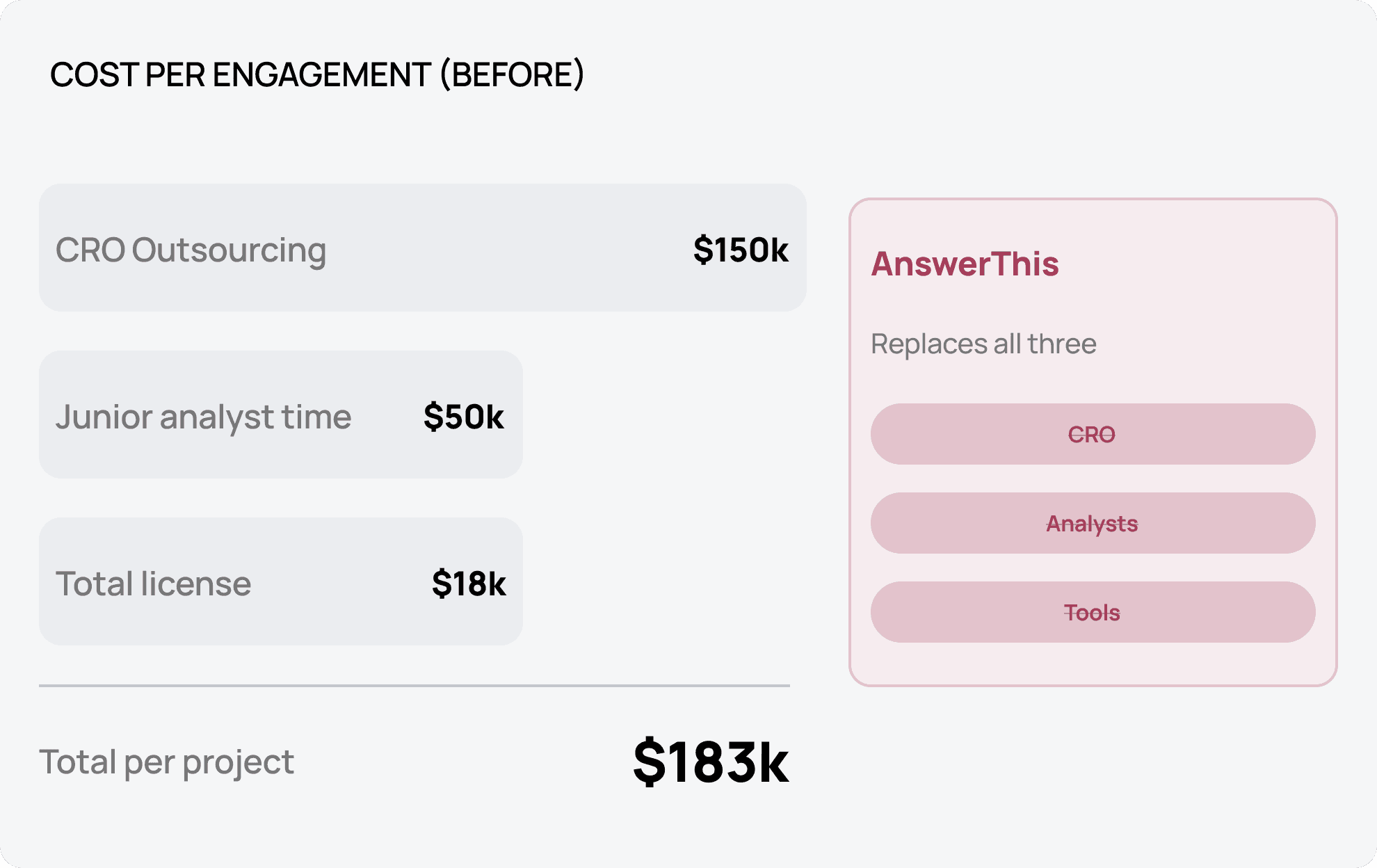
Beautiful PowerPoint, PDF, notion pages, timelines, and visuals. No junior analyst needed for 40-hour landscaping projects.

One-Click Investor/Board Export

Beautiful PowerPoint, PDF, notion pages, timelines, and visuals. No junior analyst needed for 40-hour landscaping projects.

One-Click Investor/Board Export

Beautiful PowerPoint, PDF, notion pages, timelines, and visuals. No junior analyst needed for 40-hour landscaping projects.

Chosen Research Tool of Leading Analysts, Innovators and R&D Teams

AI Research App For Due Diligence

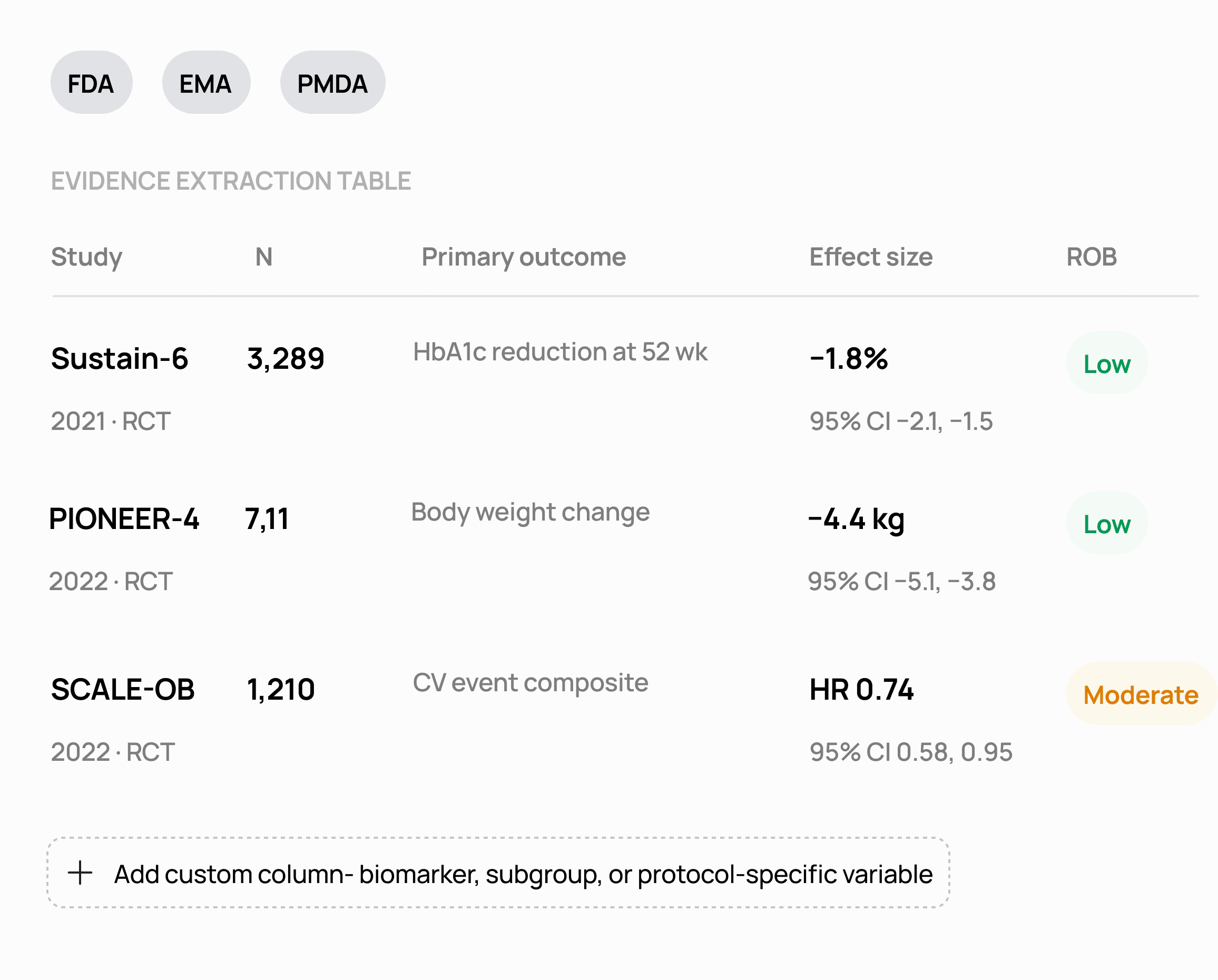
Quickly map connections between studies and extract insights from papers and patents.

AI Research App For Due Diligence

Quickly map connections between studies and extract insights from papers and patents.

AI Research App For Due Diligence

Quickly map connections between studies and extract insights from papers and patents.

Up To Date Data Extraction

Search across the most recent papers, preprints, patents, and technical reports.

Up To Date Data Extraction

Search across the most recent papers, preprints, patents, and technical reports.

Up To Date Data Extraction

Search across the most recent papers, preprints, patents, and technical reports.

Collaborate With High Performance

Perfect for distributed teams, R&D units, and analysts working across multiple domains.

Collaborate With High Performance

Perfect for distributed teams, R&D units, and analysts working across multiple domains.

Collaborate With High Performance

Perfect for distributed teams, R&D units, and analysts working across multiple domains.

Enterprise level encryption, never trained on your data.

Find Gaps in Research Backed by Sources

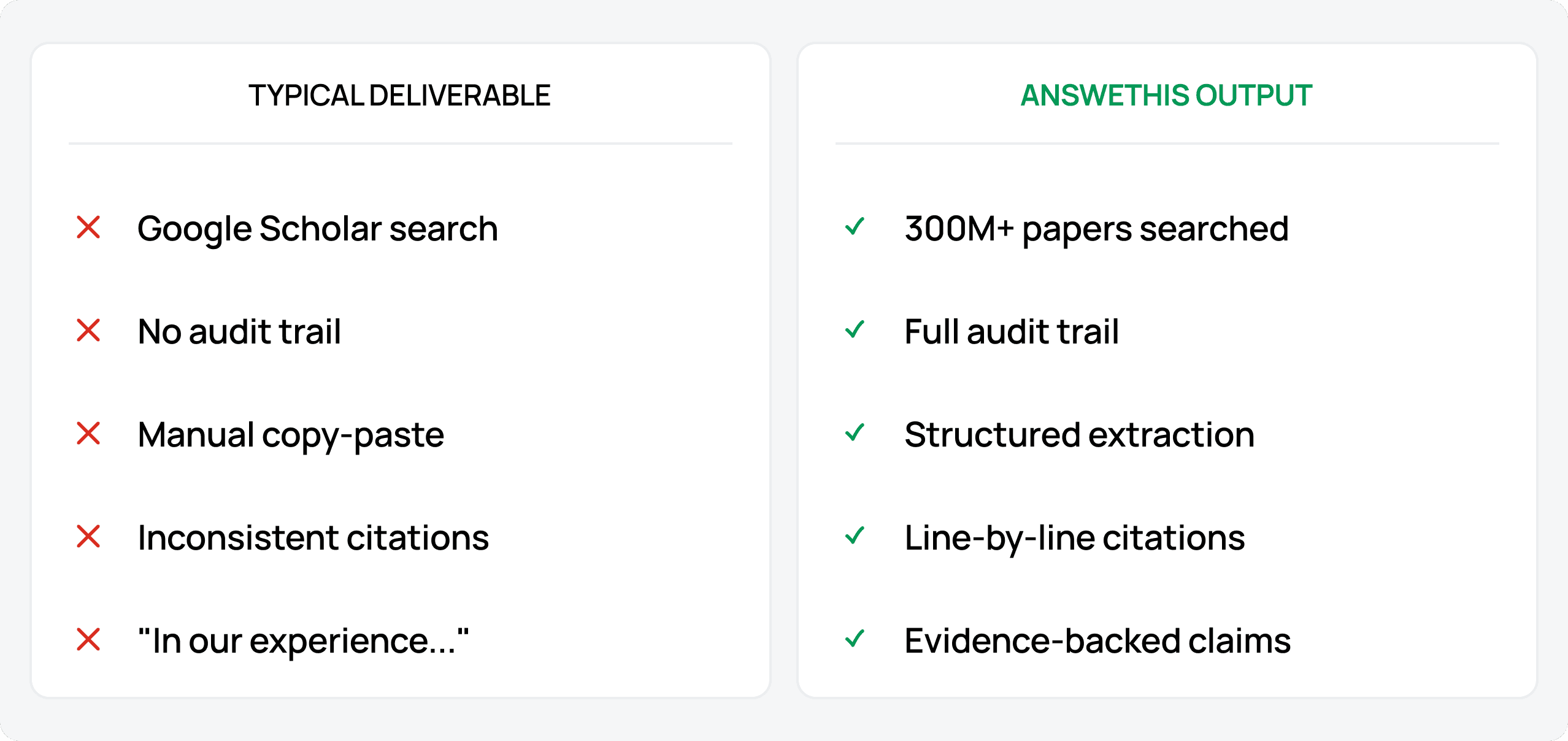
Drop perfect citations into briefs, whitepapers, and internal docs without the formatting headache.

Verify instantly and present findings you can defend.

Export Everything Reviewers & Collaborators Want

Less Tabs, More Research, Start Today

Read smarter, write better, edit faster, and submit confidently with our secure all in one AI academic writing tool!

Less Tabs, More Research, Start Today

Read smarter, write better, edit faster, and submit confidently with our secure all in one AI academic writing tool!

Less Tabs, More Research, Start Today

Read smarter, write better, edit faster, and submit confidently with our secure all in one AI academic writing tool!