

Different tools excel at different tasks, including source discovery, synthesis, long-form writing, and rapid question answering. AnswerThis supports each stage of the work, from relevant source discovery through synthesis and structured drafting. The sections ahead clarify what to prioritize and how to take the next step.
TL;DR
AI tools now support the full research process, from early discovery and literature reviews to writing and publication.
Different tools excel at different tasks, including source discovery, synthesis, long-form writing, and rapid question answering.
AnswerThis is designed as an integrated research workspace for literature reviews, gap analysis, and structured academic content.
Use the right combination of tools to reduce repetitive work while keeping your own research judgment at the center. That means weighing the pros and cons of AI honestly before it becomes part of your workflow, rather than after.
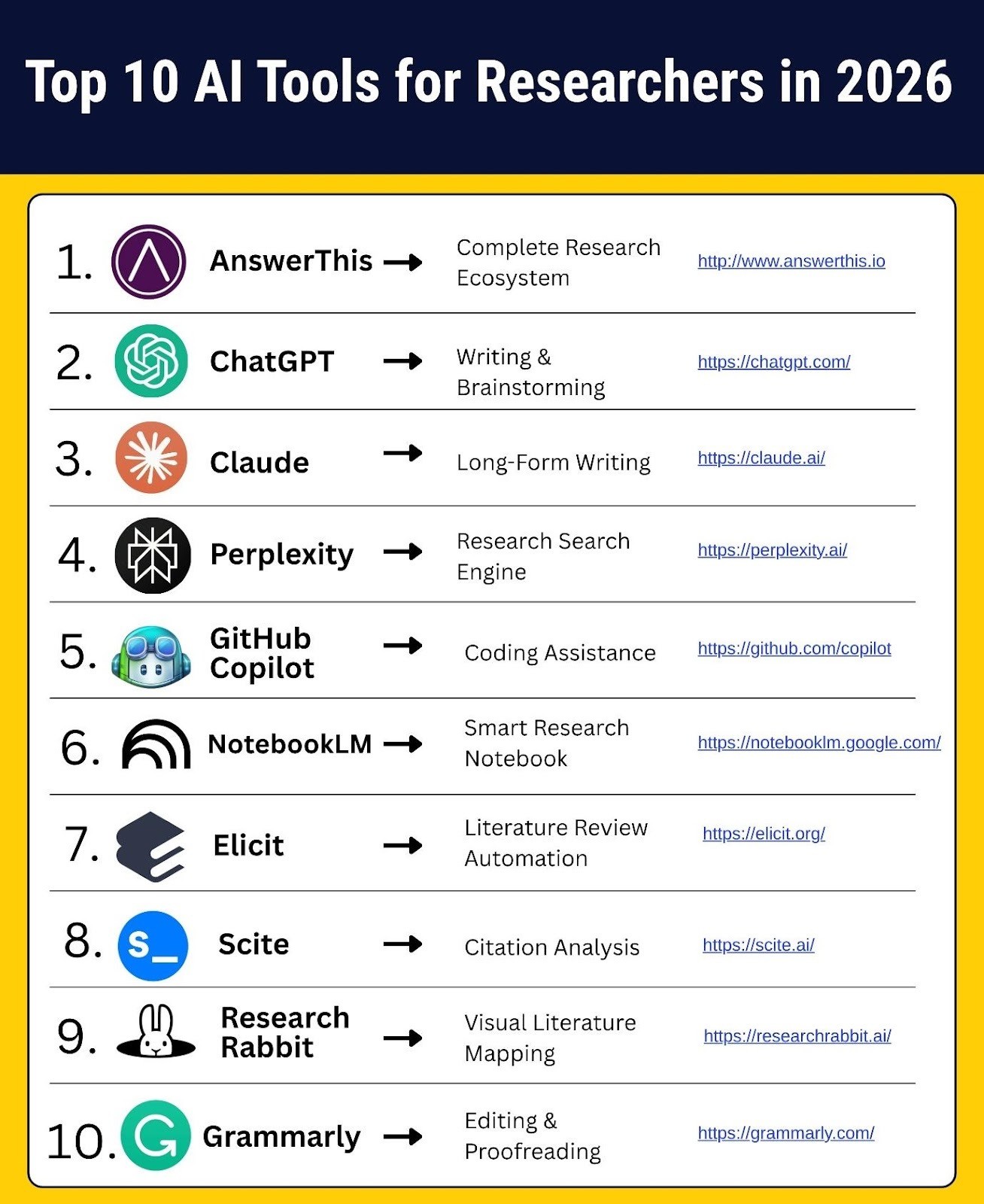
1. AnswerThis: The Ultimate AI Research Assistant
AnswerThis is designed specifically to help PhD students and faculty members automate their entire research processes and provide unprecedented support for a wide range of academic tasks, including literature reviews; identifying gaps in research; and writing of structured academic papers. Researchers can upload multiple pieces of research electronically to find the most recent research published and compare their research findings without the need for a manual literature review.
So why is AnswerThis the best? Because it’s more than just one tool; it’s a whole research ecosystem. Many of the other tools only help with certain parts of the research process, while AnswerThis is built to provide a seamless total integrated workflow for all aspects of the research process as shown in the figure below.

2. Claude: Best for Long-Form Academic Writing
Researchers now favour Claude as the ideal tool for managing longer form types of writing such as academic writing. By being able to summarize long PDF files while keeping track of all the details, it is easy to produce a long form document with coherent answers that could also be used in thesis writing or a literature review synthesis with more fluidity than other tools available today.
Best for: Long-form writing, document analysis
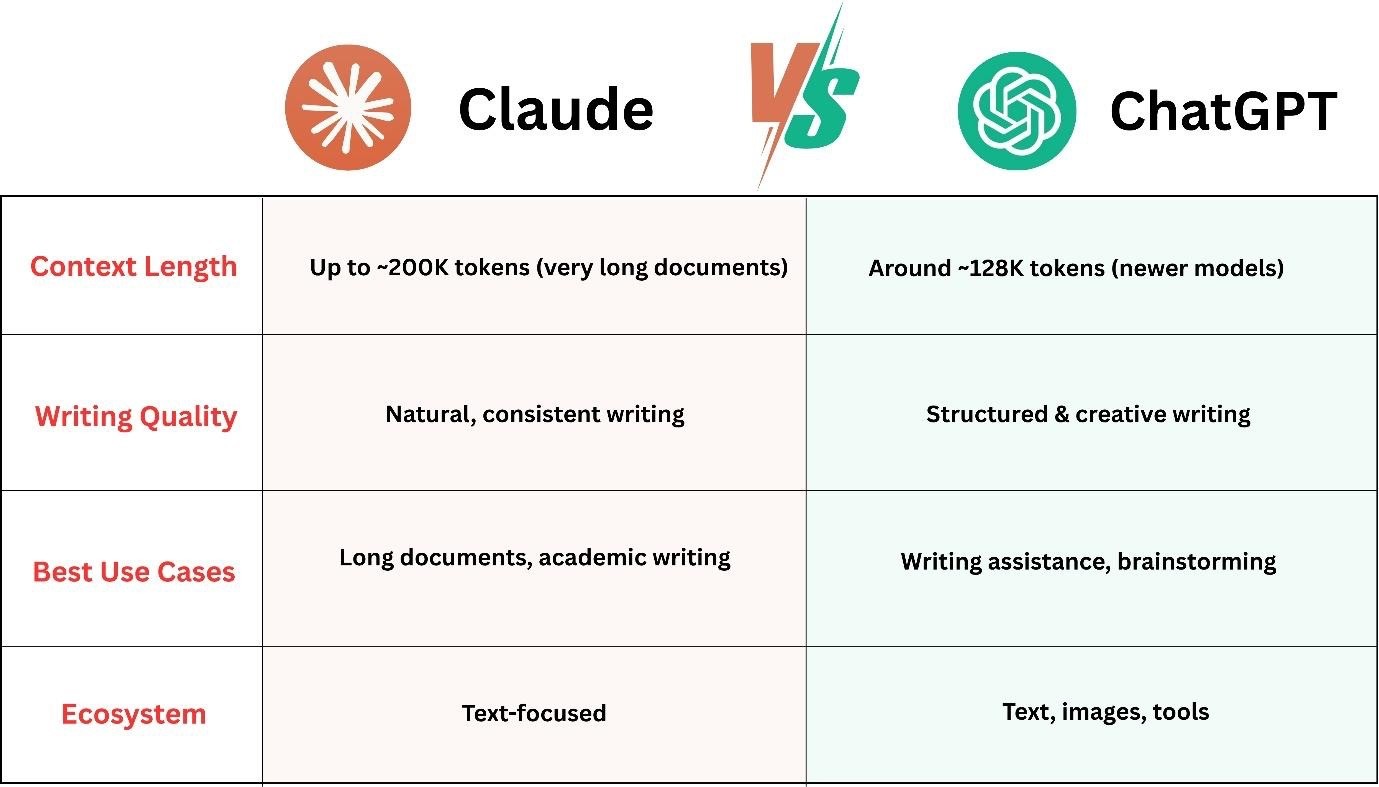
3. ChatGPT: The Most Versatile AI Assistant
ChatGPT remains the leading AI resource in flexibility for academic purposes. It works for developing ideas to create drafts, summaries, coding, and explaining complex academic subjects. If you are developing research topics or drafting paragraphs, ChatGPT is a very helpful tool. Although it is a general-purpose tool and may require some guidance / support for the specifics of deeper academic structure to be provided. Researchers can turn structured findings into engaging visual slide decks with an interactive presentation maker.
Best Uses: Writing support, idea development, providing fast explanations
4. Perplexity: AI-Powered Research Search Engine
Perplexity fills the void that exists between a Google Scholar and AI chatbot, providing users with answers to research questions that are real-time, cited sources. It is suited for anyone doing searches for literature due to the speed at which they’re able to find literature. The results are summarized and there are direct answers provided along with citation references.
Best for: Quick literature discovery, cited references
5. GitHub Copilot: Essential for Technical Researchers
The GitHub Copilot application is revolutionary for researchers in the field of programming, machine learning, and/or data science. The Copilot will work with you to write code, debug code, or provide algorithm suggestions. Utilizing a free proxy for initial request routing will help cut down the time it takes to develop something greatly when developing experimental research set ups.
Best for: Writing code, ML model development
6. NotebookLM: Smart Research Notebook
NotebookLM functions as an individualized research assistant that collaborates with your documents directly. You can upload papers, notes, and sources, so it will generate summaries, insights, and answers based on these materials.
Best for: Personalized knowledge management.
7. RemNote: AI Flashcards for Research
RemNote converts research papers and PDFs into interactive flashcards using AI, helping researchers retain key findings long-term. Its pdf to flashcards feature automatically transforms academic papers into study sets, eliminating manual note-taking. Spaced repetition ensures important concepts resurface at the optimal moment for memory retention, making it ideal for mastering research topics and organizing literature review findings.
Best for: Converting research papers to flashcards, retaining key findings, organizing research knowledge
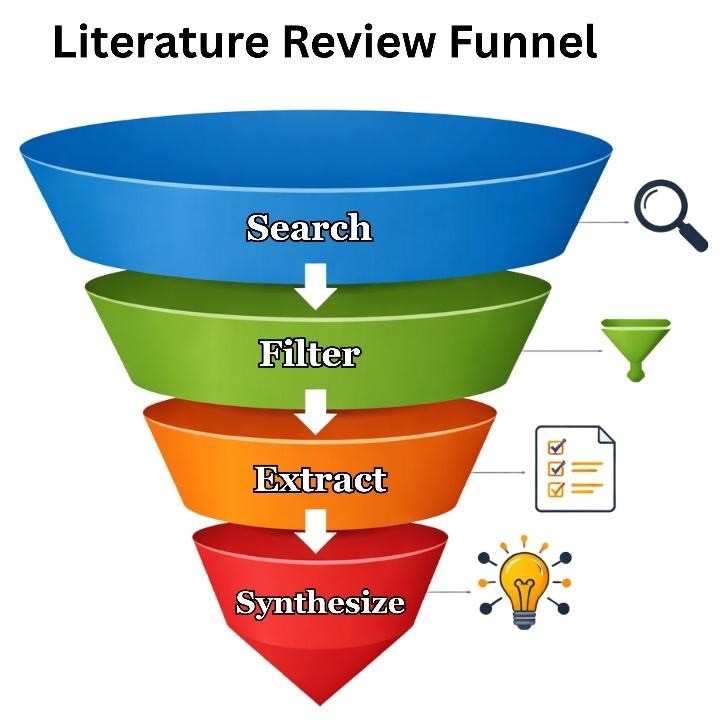
8. Elicit: AI for Literature Review Automation
Elicit is designed specifically for academic research and facilitates the automation of literature reviews, data extraction, and summarizing papers; It is particularly helpful for systematic reviews.
Best for: Structured literature reviews.
9. Scite: Smart Citation Analysis Tool
Scite provides information beyond just citations. It indicates whether a study has been supported, contrasted against, or discussed/mentioned in other studies.
Best for: Analyzing citation quality.
10. Research Rabbit: Visual Literature Mapping
Research Rabbit provides a visual connection between research papers allowing you to find relationships among studies and explore different topics.
Best for: Discovering new areas of research.
11. Grammarly: AI Writing and Editing Assistant
Grammarly continues to be an essential resource to help refine your academic writing. Grammarly improves the correctness, clarity, and tone of your writing making sure that your research documentation is presented in a professional manner.
Best for: Editing and proofreading
Why AnswerThis Outperforms All Other Tools?
All of these tools can be powerful on their own but they are all separate pieces to a jigsaw puzzle, meaning you will be switching from one tool (search) to another (write) and then to another different tool (analyze). Building custom connections between these disconnected platforms can be tedious, even if you employ a ChatGPT scraper API to help automate processes and bridge the data gaps.
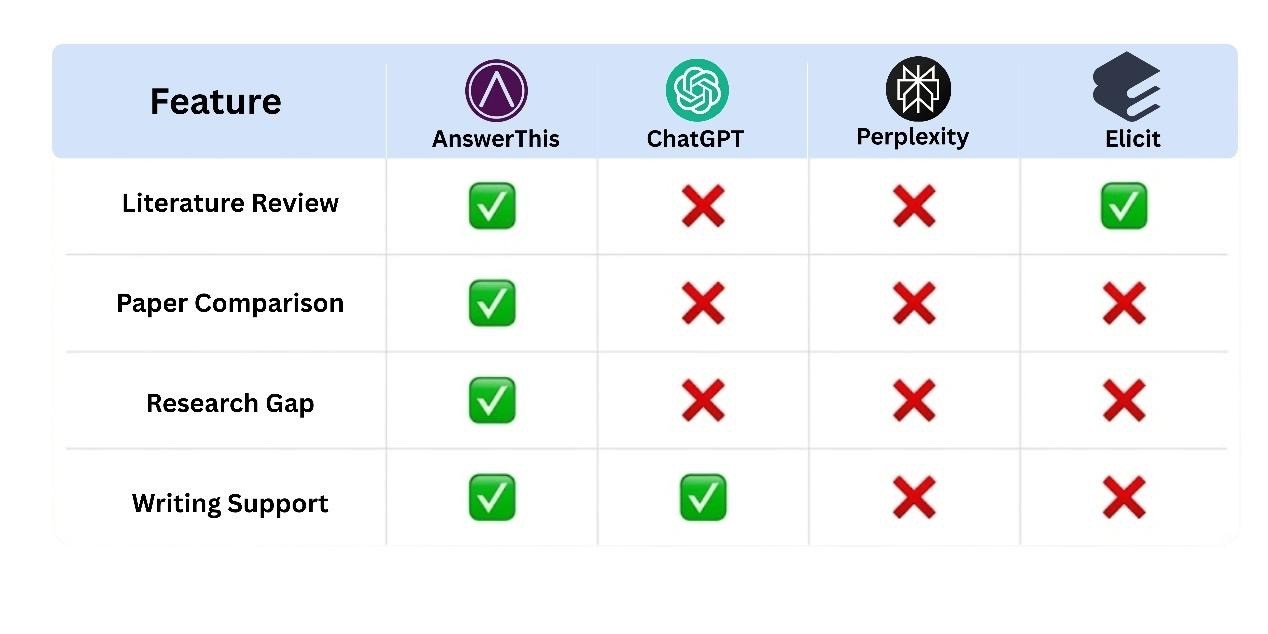
AnswerThis offers all these features under one roof:
Automated Literature Review
Compare your paper to other papers
Find a Gap in the Research
Help with Writing
In short, it brings together the power of ChatGPT + Elicit + Perplexity + everything else into ONE PLATFORM. Explore the features of AnswerThis in this webinar.
Final Thoughts: The Future of AI in Research
In 2026, the research environment is changing very quickly with the use of AI tools. AI tools are no longer an option they are NECESSARY. A successful researcher will not only use AI tools but will also know how to utilize the right combination of tools. Instead of juggling 10 different sources or jumping all around the place trying to find what you need, you can use ONE SOURCE like AnswerThis that has an AI built platform to save you time and improve your research quality.
FAQs
Which AI research tool is best for literature reviews?
The right tool depends on the task. Elicit can help automate parts of a literature review, Research Rabbit can map citation networks, and AnswerThis is useful when you need to connect discovery, evidence review, outlining, and structured writing.
What AI tools are useful for academic writing?
Claude, ChatGPT, Grammarly, and AnswerThis can support different writing tasks, from drafting and revision to organising evidence. Choose based on whether you need general writing support, editing, or a research-connected workflow.
Which AI tools help researchers analyse citations?
Scite is designed for citation analysis, while Research Rabbit helps visualise citation relationships. These tools can help you explore a paper’s context, but you should still read the original sources before relying on any conclusion.
Can AI tools help with research coding and technical work?
Yes. GitHub Copilot can support coding tasks, while tools such as NotebookLM can help organise research material. Review generated code, calculations, and interpretations carefully before using them in a research project.
How can AnswerThis support the full research workflow?
AnswerThis can help researchers move from source discovery to research-gap exploration, note organisation, outlining, and early writing in one connected workflow. Verify the underlying sources and make the final research decisions yourself.


.png)
