
An AI writer can help you organise research, shape an outline, draft from verified notes, and revise for clarity, but it should not replace source evaluation or your own argument. AnswerThis AI Writer supports this workflow by bringing research notes and early drafting together, so you can develop a working version of the paper and check it against the evidence.
TL;DR
Use an AI writer after you have defined the research question and reviewed the evidence you intend to use.
Give it a focused task, such as creating an outline, drafting one section from notes, or improving a transition.
Review every claim, citation, qualification, and conclusion against the original sources before using the draft.
Use AnswerThis AI Writer to keep research notes and drafting connected while you remain responsible for the final paper.
What an AI Writer Can and Cannot Do
An AI writer is a writing assistant that can help turn instructions, notes, or an outline into a working draft. It can generate options for headings, improve transitions, compress repetitive prose, and suggest a clearer order for ideas. It cannot evaluate the quality of a source, determine whether a claim is true, or take responsibility for the final argument.
Prepare a Research-Led AI Writing Task
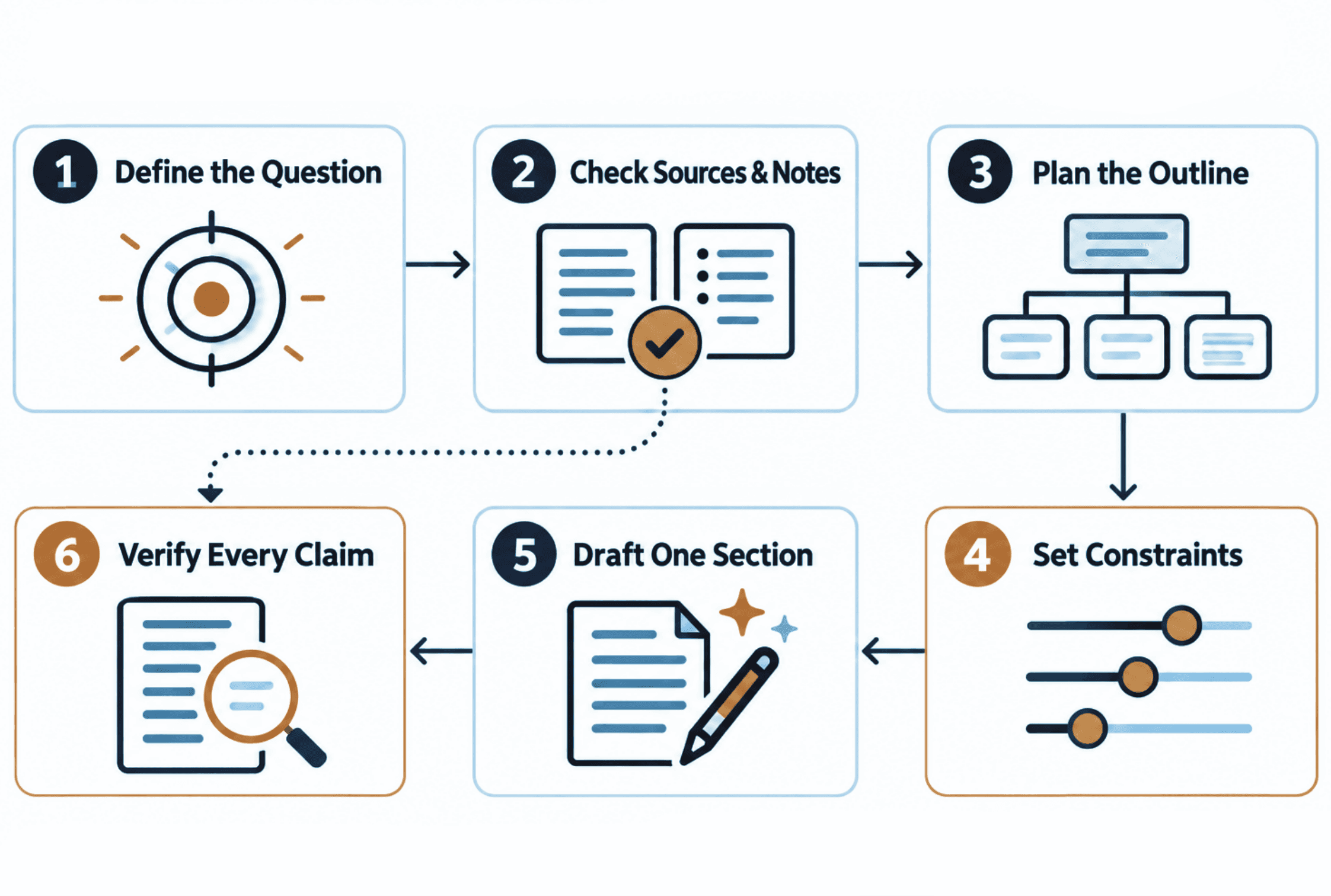
A productive workflow starts with material you have already examined. Define the question, record what each source contributes, and decide which claims belong in the paper before you generate prose. Then use an AI writer to turn that plan into a working section, keeping the source notes available while you review. This order matters because fluent wording is not evidence. The draft still needs to reflect the source’s context, limits, and level of certainty. Use AnswerThis to keep discovery, notes, outlining, and early writing connected, then review every claim against the original evidence before finalising the draft.
Choose a Defined Research Task
An AI writer is most useful when the task is bounded. Ask it to help turn a question into possible search angles, organise claims into a thesis-led outline, draft a section from notes you have checked, or revise a paragraph for a defined audience. Avoid treating it as a substitute for a complete paper. Working one section at a time makes it easier to compare the result with the evidence and to keep the paper’s reasoning coherent.
Exploring focused research-question angles
Building a thesis-led outline from verified notes
Drafting one evidence-based section at a time
Improving transitions between claims and evidence
Revising dense prose for a specific academic audience
Comparing the draft with the source notes before finalising
Refine the Research Question
A strong research question is specific enough to guide source selection and open enough to require analysis. For example, replace a broad question such as “How does social media affect students?” with a focused question about a defined group, outcome, setting, or time period. Use an AI writer to explore angles or comparisons, then narrow the result based on the assignment, available evidence, and what the paper can realistically demonstrate.
For additional university guidance on shaping a research paper from a focused question, consult Purdue OWL’s research paper guide alongside your assignment brief.
Plan a Focused Draft
The most productive use of an AI writer is selective: turn research notes into a provisional outline, use that outline to create a first draft, and revise the draft against the original sources. Ask for one section at a time and provide the claim, supporting evidence, intended audience, and target length. This reduces blank-page time while preserving a clear path from evidence to conclusion.
Set Useful Constraints
Set constraints before generating text. Specify the audience, tone, length, structure, and evidence the section must use. For an academic paragraph, ask for one claim, an explanation of the evidence, and a transition to the next point. Clear instructions make the output easier to review and keep the prose precise rather than vague or overly confident.
Keep Sources and Drafts Connected
A useful writing system should keep the materials needed for review close at hand. AnswerThis helps researchers work from saved sources and notes while drafting, which makes it easier to verify claims and return to the evidence when a section needs revision.
If your reading materials are stored as PDFs in Google Drive, the Google Drive PDF workflow explains how to move them into a controlled research process before relying on them in notes or drafts.
Draft, Verify, and Revise With AI
The practical benefit is not simply speed. A connected research-and-writing workflow can reduce context switching, make it easier to return to source notes, and help a long paper retain consistent terminology from outline through revision. It does not establish whether a claim is accurate or whether an interpretation is justified. Those are decisions you make by reading the source and evaluating how it supports the argument.
Follow a Practical AI Writing Workflow
Use the following checks to keep AI assistance tied to the research process rather than treating it as an automatic writing solution:
Define the claim, audience, and section goal before prompting
Provide only notes and evidence you have already reviewed
Request one section or revision task at a time
Compare factual statements and citations with the original sources
Revise the final wording so it reflects your own reasoning and voice
For a guided example of moving from research to a working draft, watch the research-to-draft webinar before applying the workflow to your own notes and sources.
Check Accuracy Before You Use the Draft
AI-generated writing has limits. It may omit important context, introduce inaccurate details, or make a weak claim sound more certain than the evidence allows. Check factual statements against reliable sources, review citations carefully, and compare any summary or draft passage with the original material. If the tool cannot show where a claim comes from, do not treat it as verified evidence.
For a more focused verification step, use the guide to checking AI citations and retracted papers before you treat a generated citation or source summary as ready for the final draft.
Use AI Where It Adds Real Value
AI writers are useful in research, academic writing, and content production when they are given a defined task. In a research paper, they can help compare themes across your notes, turn a plan into a section outline, draft a transition between evidence-based points, or revise a dense paragraph for a defined reader. The input matters: specific context produces more useful material to evaluate.
Use AnswerThis AI Writer for Research-Led Drafting
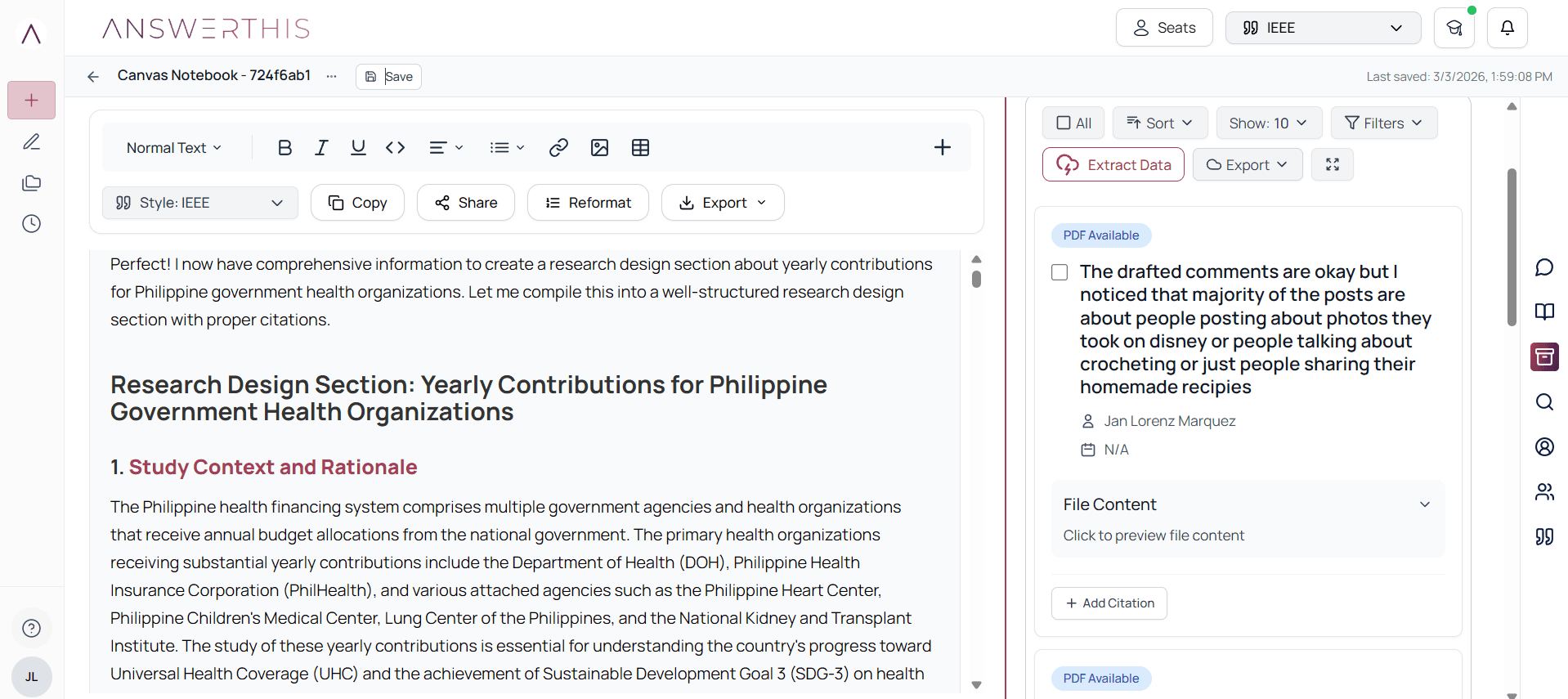
AnswerThis AI Writer is most useful when your drafting begins with organised research rather than a blank prompt. Use it to move from reading notes to a provisional structure, compare themes across the material you have saved, and develop a working draft that you can verify against the underlying sources. The value is in maintaining a visible route from evidence to prose. You still decide the argument, confirm the citations, and revise the final language for accuracy and academic voice. is designed for writers who need to move from research to a source-aware draft. It is useful for organising reading, finding connections across notes, structuring an argument, and returning to the evidence when you revise. Use it to reduce administrative work around research, then apply your own judgment to decide what the paper should claim and how it should support that claim.
Conclusion
An AI writer can improve productivity when it supports a deliberate process: research first, outline second, draft third, and revise against evidence. A practical final check is to ask whether every section answers the research question, whether every central claim is supported, and whether the paper explains rather than merely repeats its sources.
FAQs
How can an AI writer help with research papers?
An AI writer can help organise notes, build an outline, create an early draft, and revise for clarity. It cannot replace source verification, citation checks, or your responsibility for the final argument.
Can an AI writer create a good research question?
It can suggest angles, comparisons, and search terms, but a good research question still needs to fit the assignment, be researchable with available evidence, and define a manageable scope.
How should I review an AI-generated draft?
Check each factual claim against the original source, confirm citations, remove unsupported generalisations, and revise the language until it reflects your own reasoning and voice.
What are the main limits of AI writers?
AI writers can miss context, misstate facts, and produce plausible but weak analysis. Use them to support an informed workflow, not to replace close reading or critical evaluation.
How can AnswerThis support an AI writing workflow?
AnswerThis helps keep source discovery, research notes, outlining, and early drafting in one workflow. That connection makes it easier to trace a draft back to the evidence that supports it.


