
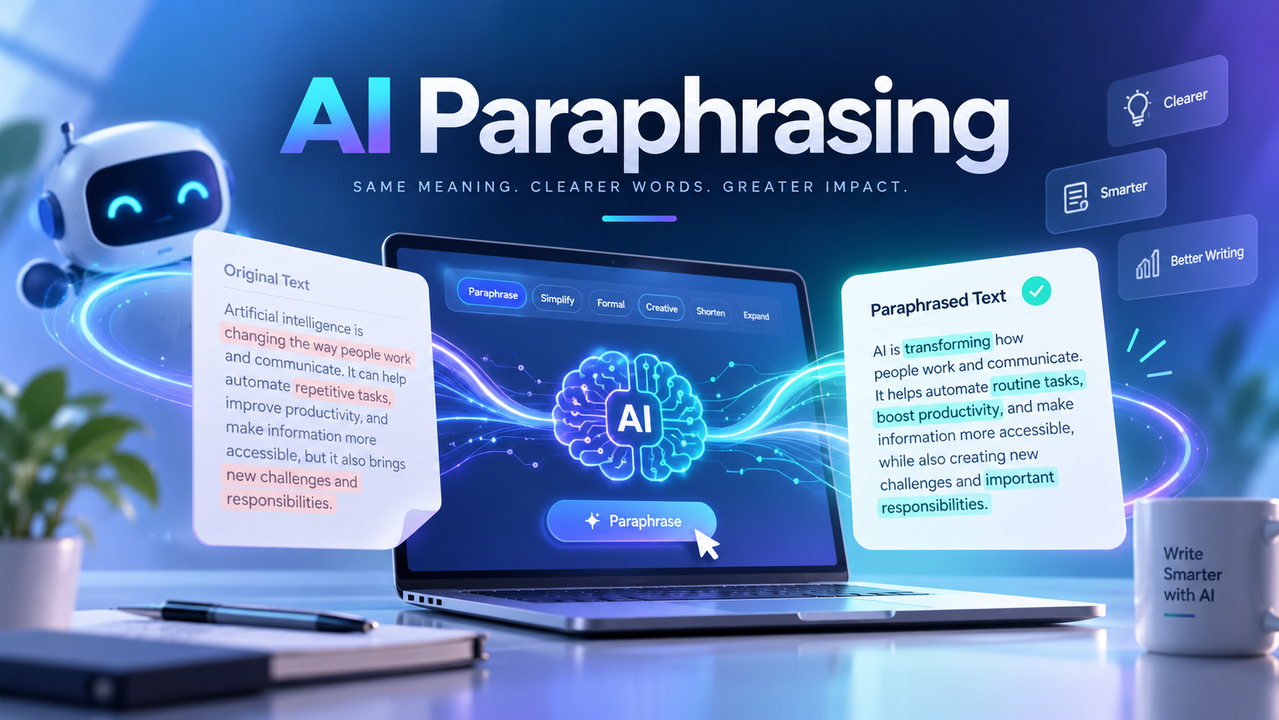
Effective paraphrasing means restating a source’s idea in your own structure and language while preserving its meaning, evidence, and level of certainty. It requires more than swapping synonyms: you need to understand the original, write from that understanding, compare your version with the source, and cite the source when required. The AnswerThis AI Paraphrasing Tool can generate alternative phrasing for a draft so you can compare wording, improve clarity, and refine your own version, while remaining responsible for checking meaning and attribution.
TL;DR
Paraphrase by changing the sentence structure and wording without changing the source’s meaning, evidence, or level of certainty.
Read the source first, write from understanding, then compare the draft with the original before using it.
Keep citations when you use another author’s idea, even when every sentence has been rewritten.
Use AI suggestions as a revision aid, then verify the final wording in your own voice and against the source.
Understanding AI Paraphrasing in Academic Writing
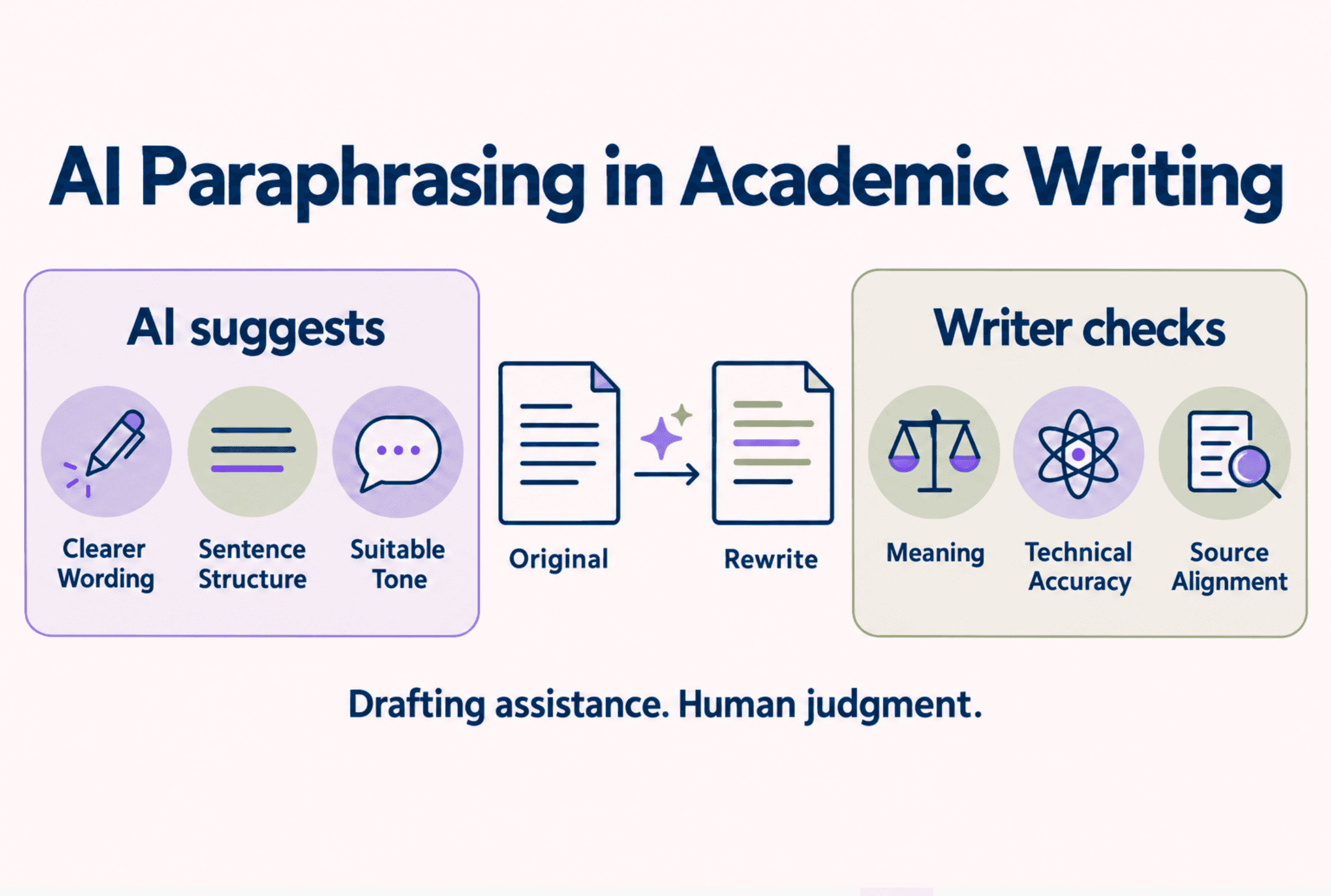
An AI paraphrasing tool can suggest alternative sentence structures, wording, or a more suitable tone. It is most useful after you understand the material well enough to recognise a meaningful change. The tool can help with expression, but it cannot decide whether a qualification is essential, whether a technical term should remain unchanged, or whether the rewrite still fits your argument.
Think of the tool as a drafting assistant rather than a source of new content. Give it a passage you have already read, ask for a specific kind of revision, and keep the original visible while you review the result. This approach preserves control over meaning and makes it easier to spot wording that has become too broad, too narrow, or too certain.
Where AI Paraphrasing Helps
AI paraphrasing can make revision more efficient when a sentence is repetitive, difficult to read, or poorly suited to its audience. It can help writers explore a clearer way to present the same point. The value lies in creating options to assess, not in accepting the first rewrite without checking it against the source and the requirements of the assignment or publication.
The same feature that makes a tool fast can also create risk. A rewrite may sound more confident, simpler, or more polished than the source warrants. Use the result to identify awkward phrasing or possible alternatives, then decide whether the revised wording still reflects the original author’s point and the purpose of your paragraph.
A Practical Academic Paraphrasing Workflow
Start with the source, not the tool. Read the passage until you can identify its central claim, the evidence or reasoning behind it, and any limitation that affects how the claim should be understood. Write a short note in plain language before requesting alternative phrasing. This gives you a stable meaning to protect as you revise.
Next, use the AnswerThis AI Paraphrasing Tool to explore wording that fits the role the source will play in your paragraph. Specify whether you need a concise explanation, a more formal tone, or a clearer transition. Compare the suggested wording with your note and the original source, then keep only the version that accurately represents the evidence and works within your own argument.
Choose the Right Level of Revision
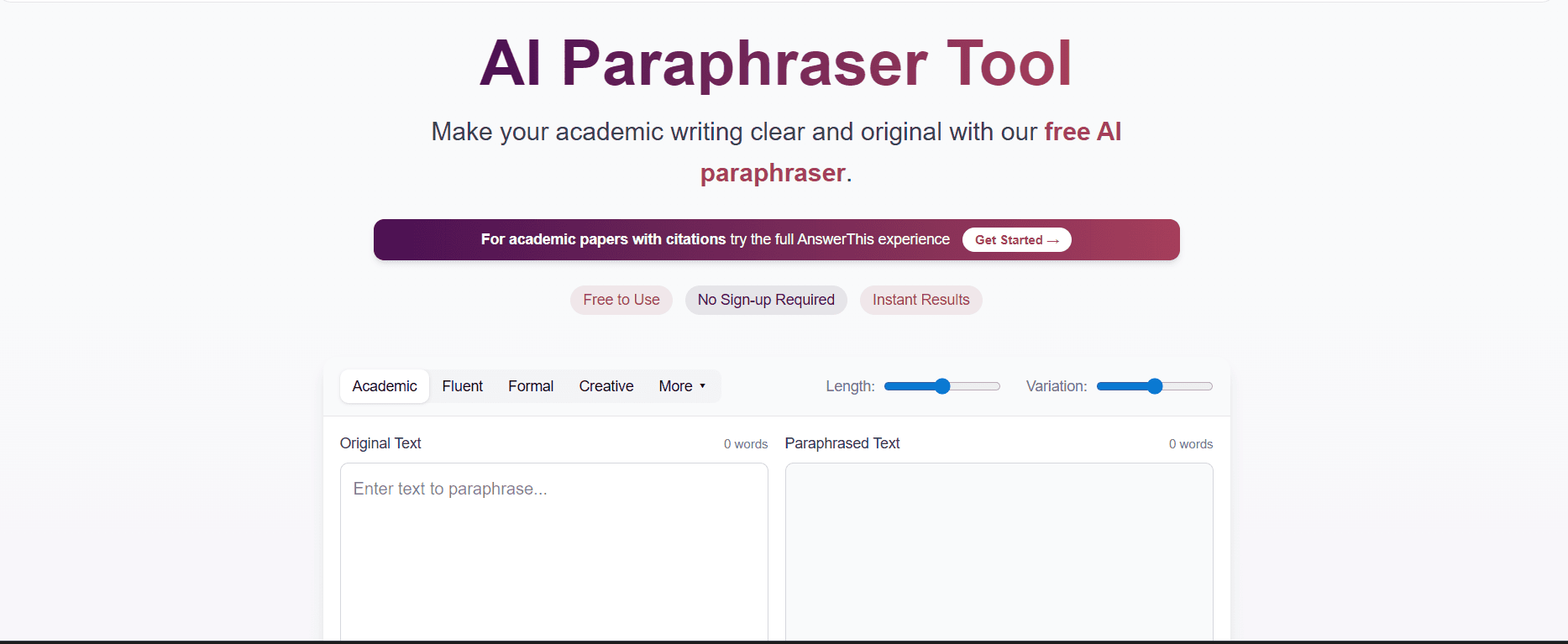
The next decision is how much to change. Use a light revision when the source is already clear and you mainly need to improve flow or integrate it into a sentence of your own. Use a fuller paraphrase when you need to explain a complex idea for a different audience or connect it to several sources. The greater the change in wording, the more carefully you should compare the result with the original claim.
Cite Paraphrases and Preserve Originality
In academic writing, paraphrasing is useful only when it preserves the source’s meaning and includes an appropriate citation. Rewriting changes the expression of an idea, not the ownership of it. The AnswerThis AI Paraphrasing Tool can offer alternative structures, but you must decide whether the source has been represented faithfully and how it should be credited in your discipline.
Use a quotation when the exact wording matters to your analysis, such as a definition or a distinctive formulation. Use a paraphrase when you need to explain the idea in the logic and voice of your own paragraph. In both cases, the reader should be able to distinguish the source’s contribution from your interpretation of it.
Check Accuracy Before You Use a Paraphrase
Before accepting a paraphrase, return to the source and check four things: the central claim is unchanged, important qualifications and technical terms remain accurate, the new structure does more than replace individual words, and the sentence still supports the point of your paragraph. This final check prevents a fluent rewrite from becoming a misleading one.
Avoid Common Academic Paraphrasing Errors
Most mistakes arise when writers treat a smooth rewrite as evidence of accuracy. A paraphrase can sound polished while making a limited finding more certain, removing a condition, or separating the conclusion from the evidence that supports it. Keep the source beside the draft throughout revision, especially when the passage contains a cautious or technical claim.
For example, a study may report an association in one population under specific conditions. A careless paraphrase can turn that limited finding into a general statement of cause and effect. Carry the population, condition, comparison, or uncertainty into your version when it affects the meaning of the claim.
Keep Sources, Notes, and Drafts Connected
Keep the original source, your interpretation notes, the AnswerThis AI Paraphrasing Tool output, and the final revised sentence together while you write. This lets you trace a claim back to its evidence, restore a missing qualification, and add the correct citation without rebuilding the context later. The tool works best as one step in that visible chain of evidence.
Use the Final Paraphrase in Context
Read the paraphrase in the full paragraph before you keep it. It should sound like your own writing, explain the source in service of your point, and lead naturally into the citation. If the sentence interrupts the flow, repeats the source too closely, or introduces a claim you cannot support, revise the paragraph rather than forcing the paraphrase to fit.
Final Check Before Submission
AI can make revision more efficient when it is used after careful reading and before a final source check. Use the AnswerThis AI Paraphrasing Tool to compare wording and improve clarity, then keep the final responsibility for meaning, evidence, citation, and academic voice with the writer. For a practical starting point, explore AnswerThis when you need a research and writing workspace.
Related resources
FAQs
What does paraphrasing mean?
Paraphrasing means explaining another author’s idea in your own words and sentence structure while preserving the original meaning. In academic writing, you still need to cite the source.
How is paraphrasing different from summarising?
A paraphrase restates a specific passage or idea in roughly similar detail. A summary shortens a larger text to its main points. Both require accurate representation and citation when based on another source.
How can I check whether my paraphrase is accurate?
Compare your version with the original for meaning, evidence, qualifications, and technical terms. Check that you changed the structure as well as the wording, then read it in context to make sure it sounds natural.
Do I need to cite a paraphrased source?
Yes. Paraphrasing changes the wording, not the ownership of the underlying idea. Follow the citation style required by your institution whenever you use another author’s research or interpretation.
How can AnswerThis help with paraphrasing?
AnswerThis can help you revise phrasing, compare research notes, and organise sources while you write. Review the output against the original source, preserve its meaning, and add citations yourself where required.


